
Conveyor & Flipping System for Steel H-Beam Welding Line
Conveyor and flipping systems are used in steel H-beam production lines to support, turn, and transfer workpieces between different stages of fabrication. These handling systems help move T-beams and H-beams into the proper position for welding, transfer, and related processing steps.
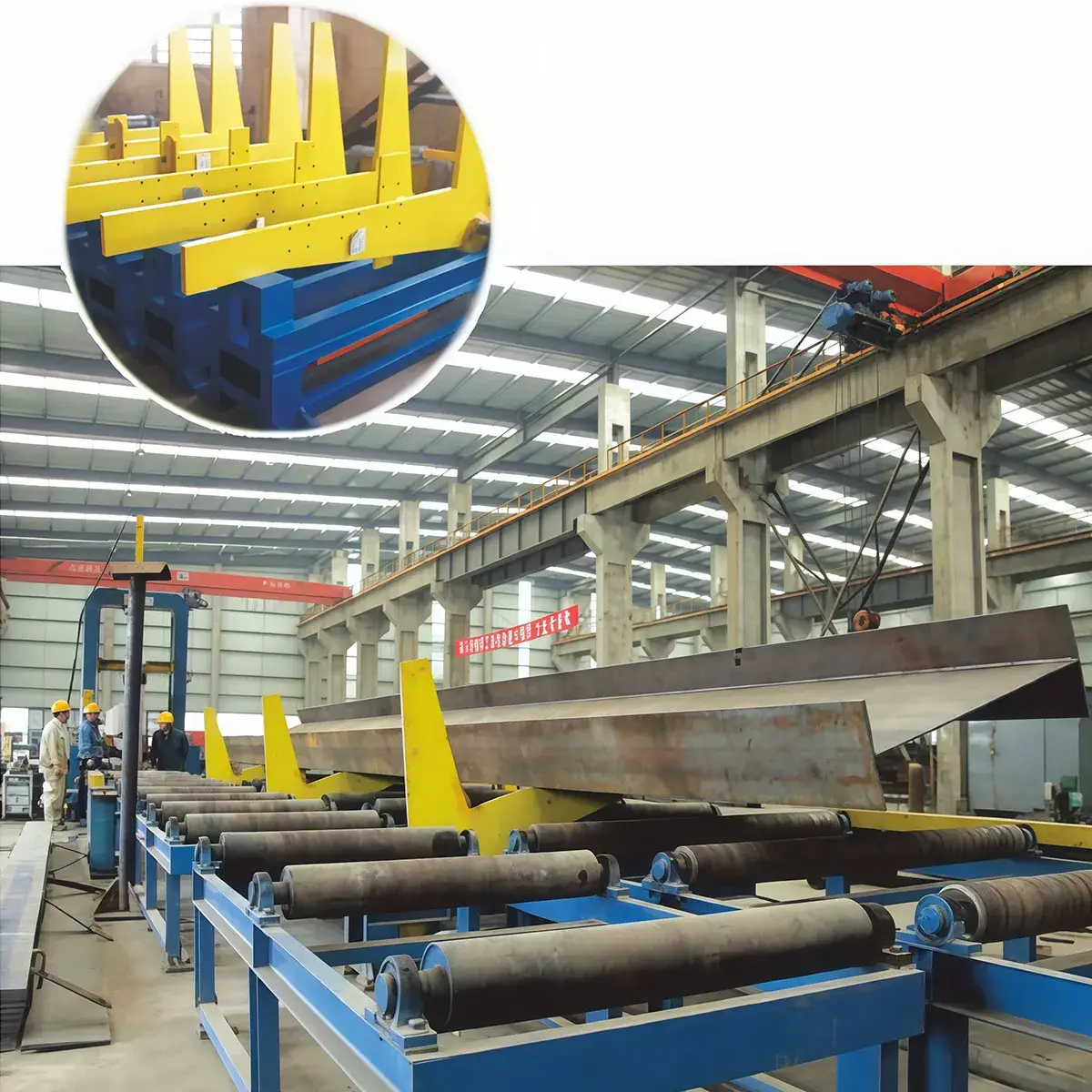
90° hydraulic flippers are used in H-beam welding lines to rotate assembled T-beams or H-beams into the correct position for the next welding stage. The flipping mechanism uses three cylinders to drive three L-shaped arms together, allowing T-beams or H-beams to rotate smoothly while staying stable during the turning process.
- Flange width: 140 - 800 mm
- Web height: 160 - 2000 mm
- Max. workpiece weight: 20 t
- Max. hydraulic pressure: 14 MPa
- Workpiece length: 4000 - 15000 mm
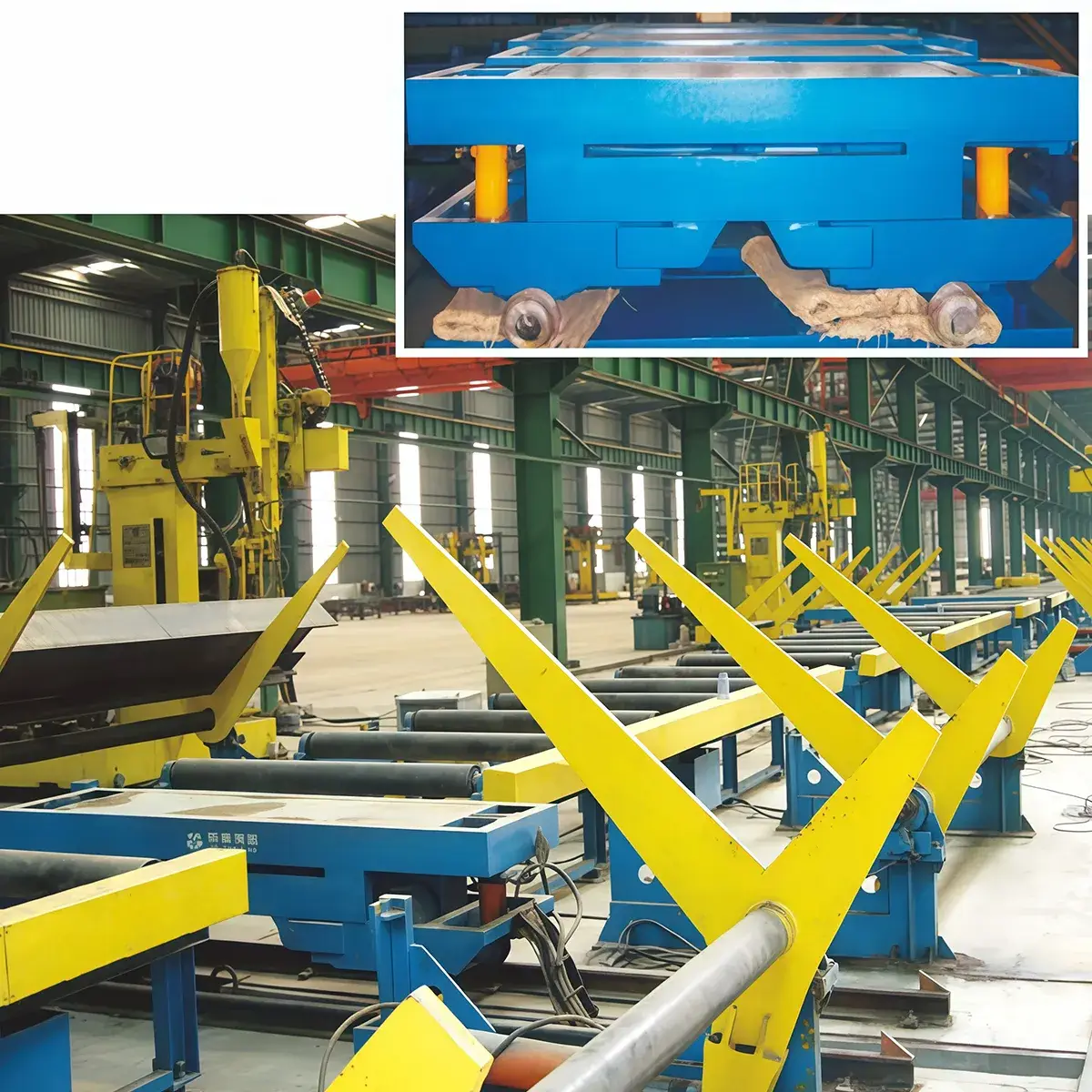
Steel beam transfer units are mainly used in H-beam welding lines to move H-beams between different stations, usually working in pairs to transfer the workpiece from one welding position to the next after one weld seam has been completed. This allows the following operation to continue more smoothly without having to reposition the H-beam manually.
- Lifting capacity: 20 t/set
- Lifting stroke: 80 mm
- Hydraulic pressure: 16 MPa
- Travel motor power: 1.5 kW
- Travel speed: approx. 6 m/min
- Applicable workpiece length: 4000–15000 mm
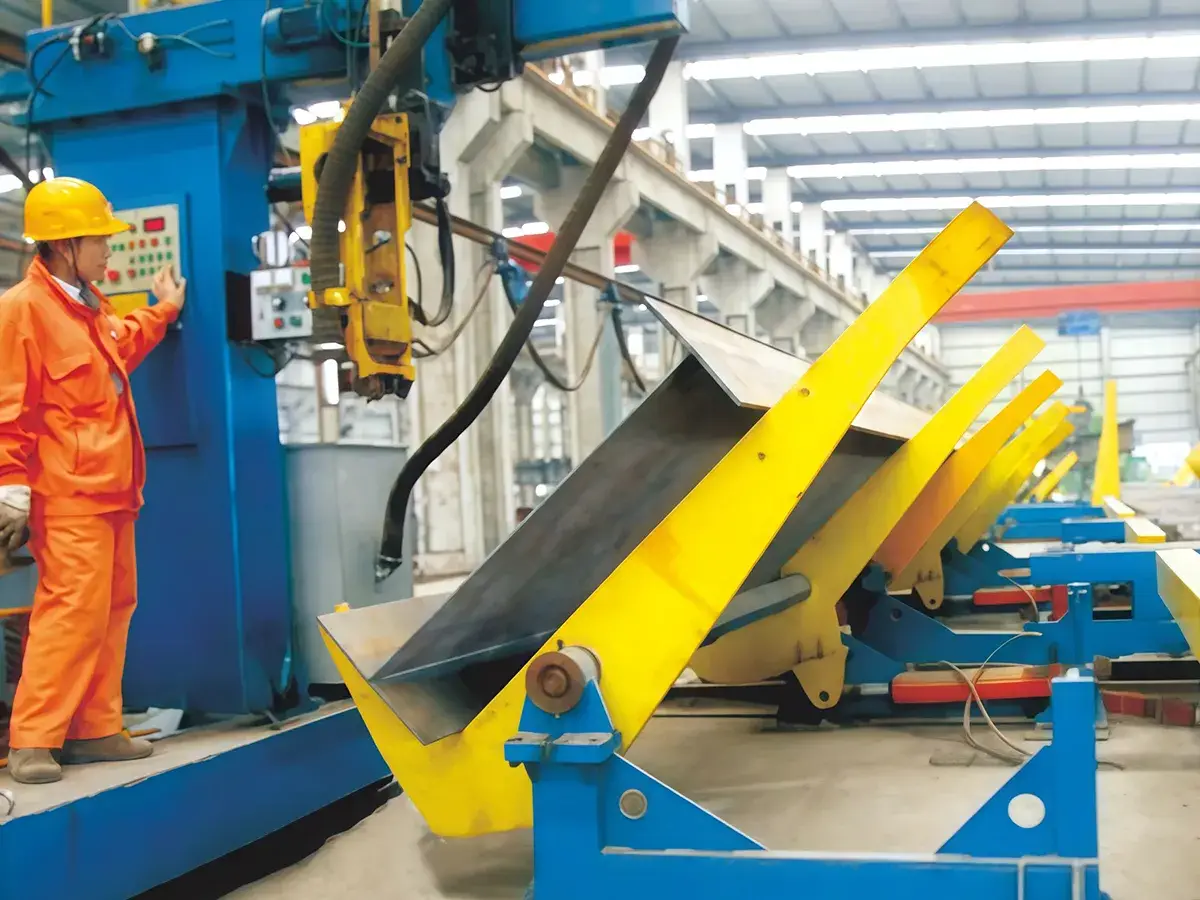
60° hydraulic flippers are auxiliary turning systems used in the welding section of H-beam welding lines. They usually work in groups of three to hold the workpiece in the proper position for boat-shaped welding, giving the H-beam stable support during the welding process. After welding, the flippers turn the workpiece back into the H-beam position, which makes it easier for the steel transfer equipment to move it to the next station.
- Tilting angle: 0–60°
- Max. workpiece weight: 20 t/set
- Hydraulic pressure: 16 MPa
- Applicable workpiece length: 4000–15000 mm
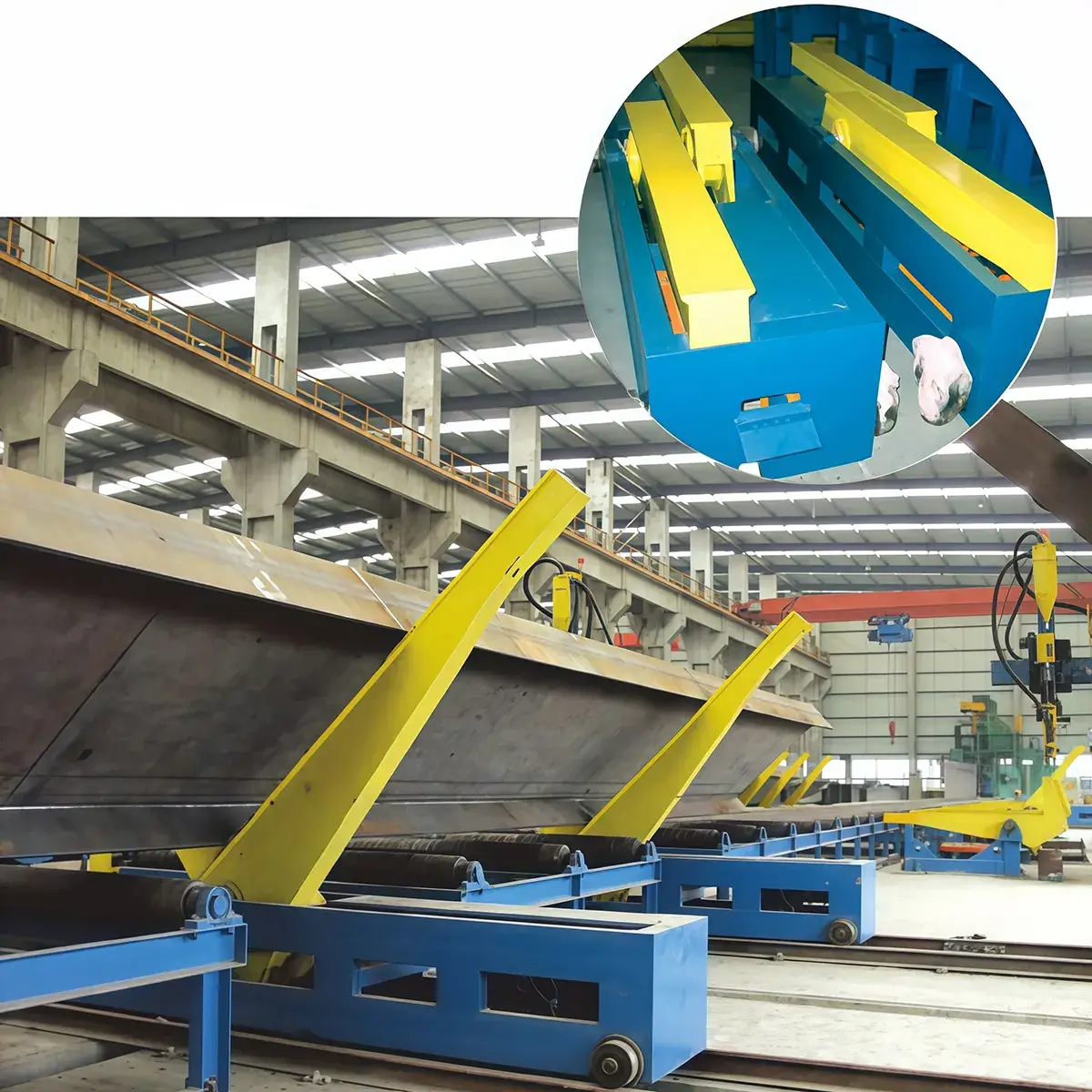
In H-beam production, 180° hydraulic flippers are used when workpieces need to be turned and moved at the same time. Depending on the process, they can rotate the workpiece by 90° or 180° and place it in the right position for the next operation. They are commonly used at stations for welding, straightening, inspection, non-destructive testing, and manual welding, where turning and repositioning are part of the normal workflow.
- Tilting angle: 0–60°
- Max. workpiece weight: 20 t/set
- Hydraulic pressure: 16 MPa
- Applicable workpiece length: 4000–15000 mm